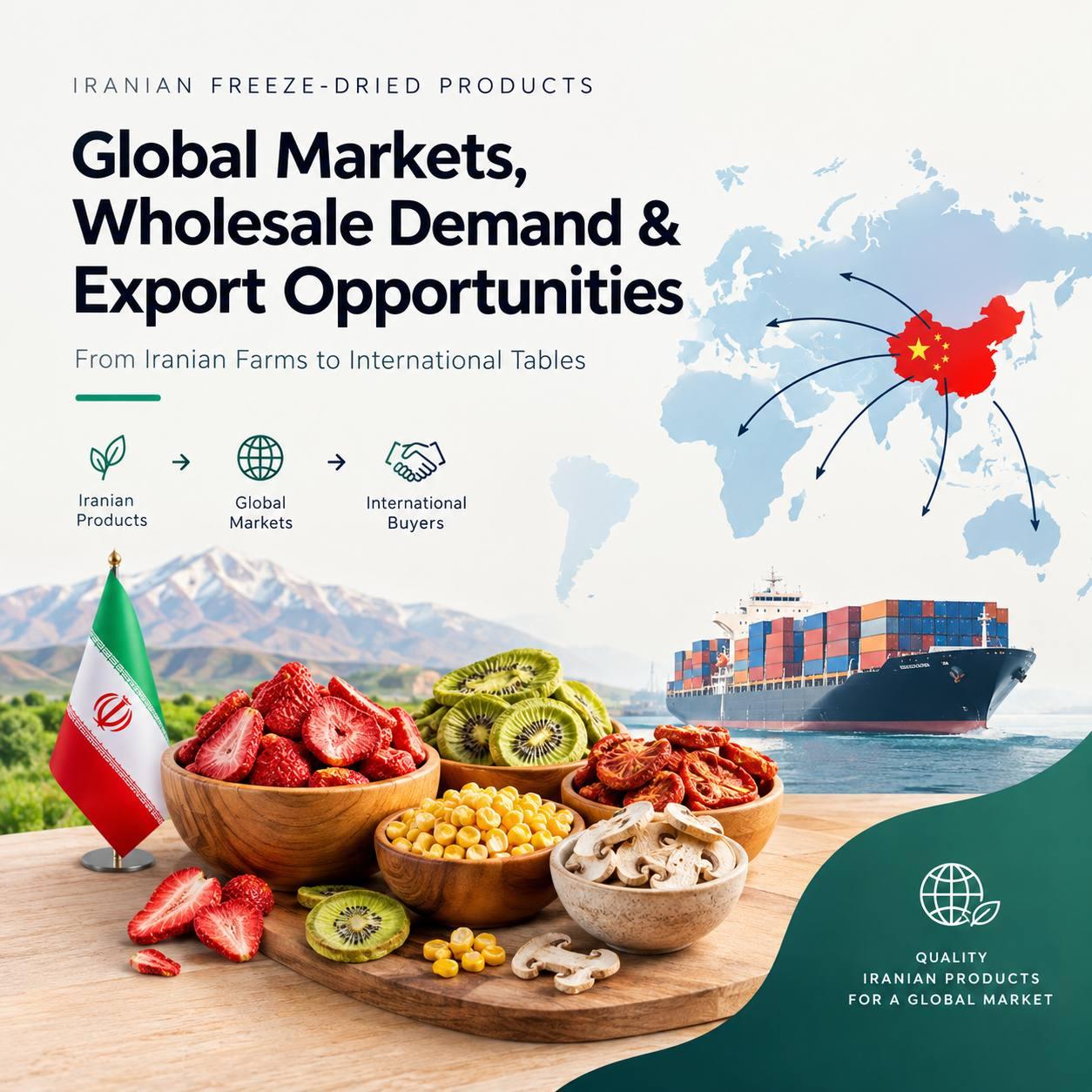
Explore the export potential of Iranian freeze-dried products, with a focus on China, wholesale opportunities, internati...
صادرات کن
Iran and China have developed extensive economic and commercial relations across energy, industry, agriculture, infrastructure, technology, and international trade. Their economic structures also create areas of natural complementarity. Iran has significant energy resources, a diverse agricultural sector, mineral resources, industrial capabilities, and a growing base of knowledge-based companies. China, meanwhile, has a large consumer market, extensive manufacturing capacity, advanced supply chains, and strong demand for energy, raw materials, food products, and specialized goods.
For Iranian businesses, the Chinese market represents an opportunity that extends beyond traditional energy exports. Agricultural products, saffron, nuts, dried fruits, food products, industrial materials, steel products, petrochemicals, handicrafts, and other value-added goods can all form part of a broader export strategy.
However, successful Iran-China trade requires more than identifying a product with potential demand. Exporters need competitive pricing, consistent quality, appropriate packaging, reliable supply, documentation, logistics, and access to potential buyers.
This is where professional B2B trade and international supplier visibility can become particularly important.
The economic relationship between Iran and China extends well beyond the traditional exchange of energy and manufactured goods.
Energy remains one of the most important areas of cooperation. Iran possesses substantial oil and natural gas resources, while China is one of the world's largest energy markets. This creates a strong foundation for bilateral economic relations.
At the same time, there is significant potential for expanding non-oil exports from Iran to China.
Iran has access to a wide range of agricultural and industrial products that can be developed for international markets. These include food products, saffron, nuts, dried fruits, minerals, steel products, petrochemicals, handicrafts, and other processed or value-added goods.
China also provides Iranian businesses with access to machinery, industrial equipment, vehicles and components, electronics, telecommunications equipment, consumer products, and other manufactured goods.
The relationship therefore has the potential to function as a broader commercial ecosystem rather than simply an energy-based trade relationship.
For Iranian businesses, an important question is not simply whether China is a large market, but which Iranian products can create realistic commercial opportunities in China.
Iran's export potential includes several major product categories.
Iran's agricultural diversity is one of its important advantages in international trade.
Products with export potential include:
You can explore more information about Iranian agricultural products through Abrisham Road's agricultural section.
Among these categories, saffron has a particularly strong connection with Iran's international agricultural identity.
Iranian saffron can serve specialty food, culinary, ingredient, and wholesale markets, depending on product quality, packaging, pricing, and destination-market requirements.
Iranian nuts and dried fruits represent another important export category. Their long-established production base and relatively high value per unit weight can make them relevant to international wholesale markets.
Iranian nuts and dried fruits can be positioned for international buyers looking for agricultural products and specialty food ingredients.
Iran also has considerable potential in industrial and resource-based exports.
Steel and iron products, minerals, petrochemical products, polymers, and other industrial materials are important components of Iran's export capacity.
However, increasing the share of processed and value-added products rather than relying primarily on raw materials remains an important long-term consideration for Iranian exporters.
Iran also has capabilities in technology-oriented sectors such as biotechnology, nanotechnology, engineering, and other knowledge-based industries.
Cooperation with Chinese companies could therefore create opportunities beyond conventional product exports, including technology partnerships, joint ventures, manufacturing cooperation, and knowledge transfer.
Oil and petroleum products have historically played a major role in Iran's international trade. However, a more diversified export strategy requires Iranian businesses to look beyond traditional commodities.
Non-oil exports can create opportunities where Iranian companies have access to local raw materials, specialized knowledge, production capabilities, or competitive costs.
An agricultural product, for example, can move through several stages:
Iranian Agricultural Product → Processing → Quality Control → Packaging → International Marketing → Chinese Buyer
This approach can create considerably more commercial value than simply exporting an unprocessed commodity.
For products such as saffron, pistachios, dried fruits, and processed agricultural goods, the ability to provide consistent quality, reliable quantities, professional packaging, clear specifications, and competitive wholesale pricing can be especially important.
The potential of Iran-China trade is significant, but the relationship also faces structural challenges.
According to the trade information provided for this analysis, Chinese customs data put bilateral trade in 2024 at approximately $13.4 billion, excluding much of Iran's oil trade because of sanctions-related reporting limitations. Chinese exports to Iran were approximately $8.9 billion, while imports from Iran were around $4.4 billion.
These figures indicate a significant trade imbalance in China's favor when measured through these customs statistics.
For Iranian businesses, this also highlights an important opportunity: increasing the volume and diversity of competitive non-oil exports to China.
At the same time, trade statistics should be interpreted carefully because sanctions, reporting methods, indirect trade channels, and differences between official customs data and actual commercial flows can affect the figures.
A major issue in Iran's trade structure is the significant role of raw materials and commodities.
Iran exports products such as crude oil, petroleum products, petrochemicals, minerals, agricultural commodities, and other resource-based goods.
China, in contrast, exports a broad range of manufactured products to Iran, including:
This difference raises an important strategic question for Iranian exporters:
How can Iran increase the export of processed and value-added products instead of relying primarily on raw materials?
For individual businesses, the answer can involve investment in processing, packaging, product development, quality standards, branding, and professional international sales.
Trade is only one dimension of Iran-China economic relations.
Chinese investment and cooperation in infrastructure could potentially contribute to development in areas such as:
Projects connected to east-west and north-south transportation corridors, the Makran coast, and Bandar Jask can have broader implications for trade and logistics.
For exporters, infrastructure matters because transportation directly affects delivery times, logistics costs, market access, and export competitiveness.
Another area with long-term potential is technology.
Cooperation between Iranian and Chinese companies can extend into emerging fields such as artificial intelligence, autonomous vehicles, biotechnology, nanotechnology, telecommunications, and industrial technologies.
Potential commercial models include:
For Iranian businesses, this could create opportunities to move beyond traditional commodity exports toward higher-value products and services.
Iran-China economic relations also operate within a complicated geopolitical environment.
Iran's membership in organizations such as the Shanghai Cooperation Organisation and BRICS provides additional frameworks for economic and political interaction.
However, geopolitical alignment does not automatically translate into commercial success.
Iranian companies still need to deal with practical issues including international sanctions, financial restrictions, regulatory requirements, logistics, payment mechanisms, and the risk-management policies of Chinese companies.
Western sanctions remain one of the major challenges affecting the ability of large Chinese companies and international financial institutions to engage directly with Iran.
As a result, some commercial relationships may be more difficult to structure than conventional international trade transactions.
Having an exportable product is only the first step.
An Iranian supplier may have a high-quality product, competitive pricing, and sufficient production capacity, but without access to suitable buyers, the export opportunity may never become an actual transaction.
This is particularly important in a market as large and competitive as China.
Successful B2B trade requires suppliers to be able to present:
The next step is connecting this information with potential buyers, importers, distributors, wholesalers, and commercial partners.
This is where digital B2B platforms can play an important role.
For Iranian exporters looking to enter the Chinese market, digital visibility can become an important part of international business development.
A professional online product presence allows suppliers to present their products to potential international buyers before direct negotiations begin.
Abrisham Road's supplier marketplace provides a platform where Iranian suppliers can present their products and increase their visibility among international buyers.
The objective is not simply to advertise Iranian products. The larger goal is to create a practical commercial path:
Iranian Supplier → Product Presentation → International Visibility → Potential Chinese Buyer → Business Negotiation → Export Opportunity
This approach can be particularly useful for agricultural and food suppliers that want to move from domestic wholesale markets toward international trade.
The future of Iran-China trade does not necessarily depend on increasing the export of one particular commodity.
A stronger export strategy could involve developing a broader portfolio of Iranian products with different levels of processing and value addition.
For example:
Raw Agricultural Product → Processed Product → Packaged Product → Value-Added Product → International B2B Offering
This approach can create additional opportunities for Iranian suppliers while reducing dependence on a limited number of traditional export categories.
Products such as saffron, nuts, dried fruits, processed agricultural products, specialty foods, and other value-added goods can therefore become part of a broader export strategy.
International sanctions can affect payment methods, banking relationships, shipping, insurance, and the ability of certain companies to participate in trade with Iran.
Products entering China may be subject to specific import regulations, documentation requirements, product standards, labeling requirements, and customs procedures.
Transportation routes, shipping costs, delivery times, customs procedures, and packaging requirements can significantly affect the final competitiveness of an Iranian product.
Chinese buyers have access to suppliers from many countries. Iranian exporters therefore need competitive pricing combined with reliable quality and supply.
A buyer interested in a product today may require the same specification and quantity repeatedly.
For this reason, production capacity and supply consistency can be just as important as the initial product price.
Iran and China have the potential to expand their economic relationship beyond traditional energy and commodity trade.
Energy, infrastructure, industrial cooperation, technology, agriculture, food, minerals, and non-oil exports all provide potential areas for commercial cooperation.
For Iranian businesses, the opportunity lies in identifying products that can compete in the Chinese market and then building the commercial infrastructure necessary to sell them internationally.
For Chinese buyers, Iranian suppliers can provide access to products originating from one of the world's important agricultural and resource-rich economies.
The strongest opportunities are likely to emerge where three elements come together:
Competitive Iranian Products + Reliable Supply + Access to International Buyers
Digital B2B platforms can support this connection by making suppliers and their products more visible to potential customers in international markets.
Iran-China trade represents a complex combination of opportunity and challenge.
Energy, infrastructure, industrial cooperation, technology, agriculture, food, minerals, and non-oil exports all provide potential areas for commercial cooperation. At the same time, sanctions, trade imbalances, regulatory barriers, logistics, geopolitical considerations, and domestic business constraints can make international trade more complicated.
For Iranian exporters, one of the most important long-term opportunities is to move beyond raw-material exports and develop higher-value, professionally packaged, consistently supplied products for international buyers.
China can be an important market in this strategy.
But entering the Chinese market requires more than having a good product. Iranian suppliers need competitive pricing, clear product information, reliable supply, appropriate documentation, suitable logistics, and—perhaps most importantly—access to potential buyers.
This is where Abrisham Road can help increase the international visibility of Iranian suppliers and create opportunities for connections with potential buyers in China and other global markets.
Iranian products have the potential to reach international markets. The next step is turning that potential into structured, sustainable trade.
For Iranian suppliers interested in exploring international business opportunities, contact Abrisham Road to discuss potential commercial connections.
Explore the export potential of Iranian freeze-dried products, with a focus on China, wholesale opportunities, internati...

Freeze drying is an advanced food-preservation method that extends shelf life while preserving much of a product’s color...
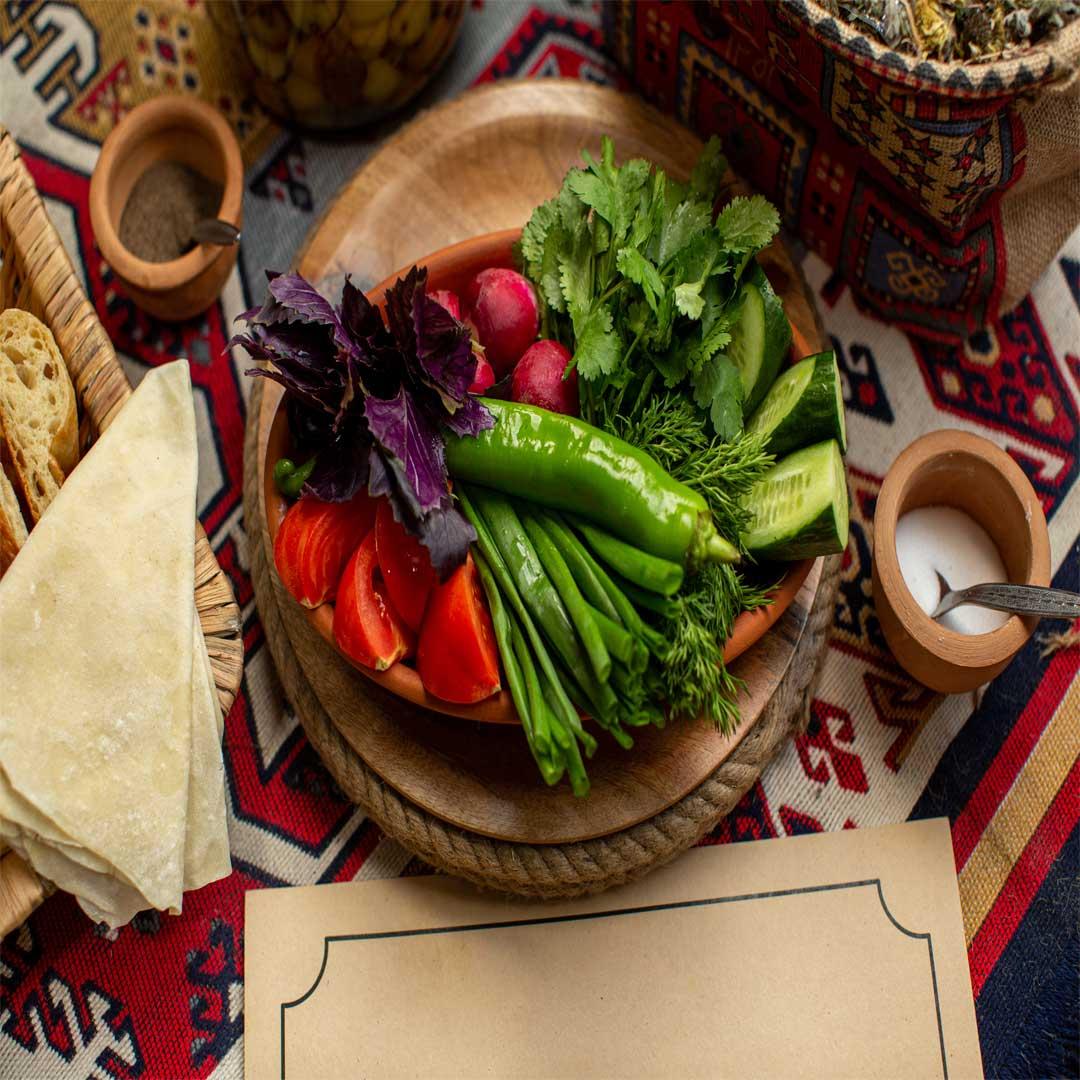
France is a major EU market with high demand for premium, natural, and exotic foods. Iran exports pistachios, saffron, d...
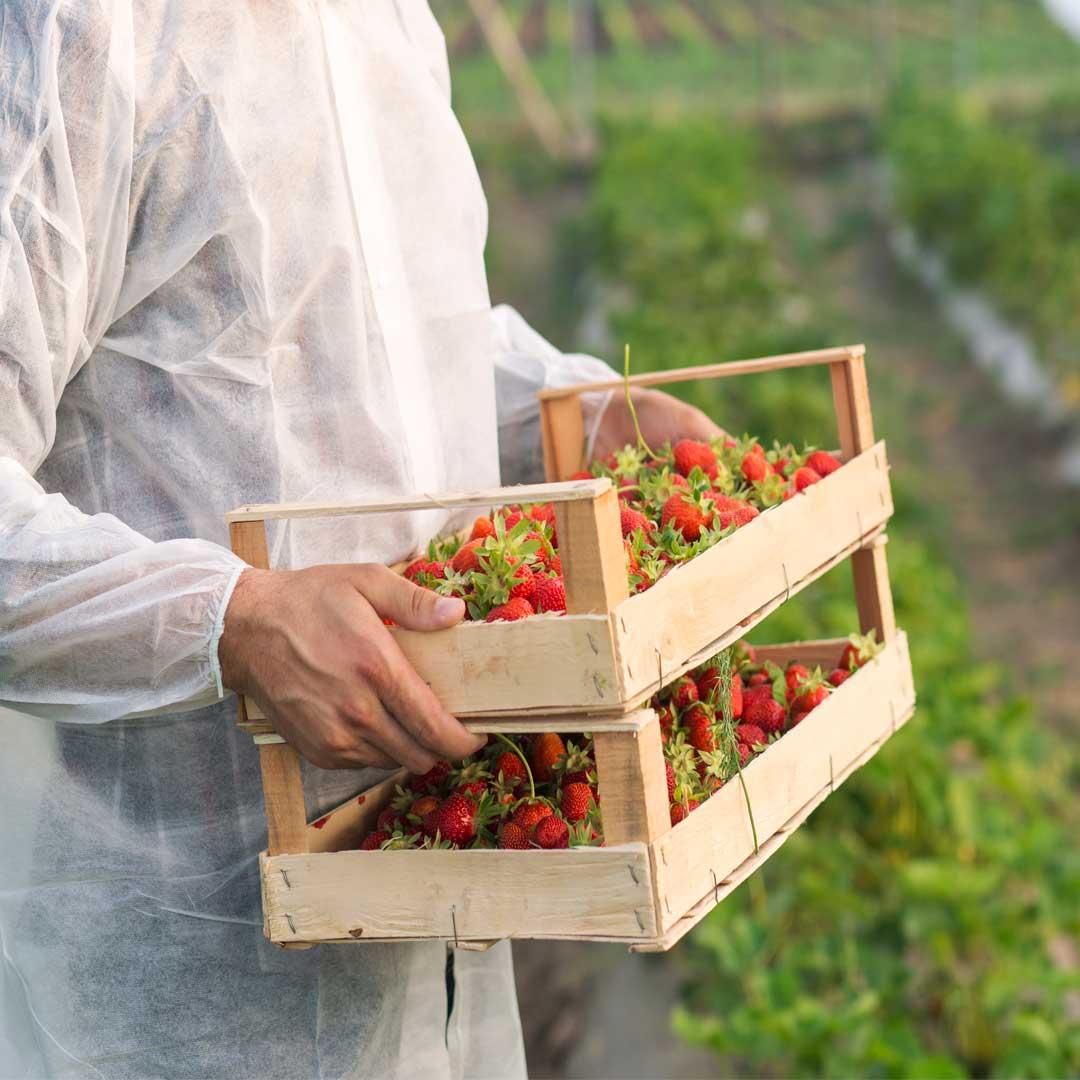
Iran’s agricultural and food exports to Italy have grown rapidly, driven by demand for premium pistachios, dates, saffro...