
Essential amino acids (EAAs) are vital nutrients that support muscle growth, tissue repair, and overall health while ser...
صادرات کن
Amino acids are the fundamental building blocks of proteins and play a vital role in nearly every biological process in the human body. They are essential for muscle growth, tissue repair, enzyme production, hormone synthesis, immune function, and overall health.
Understanding the difference between essential amino acids and non-essential amino acids is important not only for healthcare professionals and nutritionists but also for athletes, dietary supplement manufacturers, pharmaceutical companies, food producers, and businesses operating in the global B2B marketplace.
As demand for high-quality nutritional supplements and functional foods continues to grow worldwide, amino acids have become indispensable ingredients across multiple industries.
Amino acids are organic compounds that combine to form proteins. The human body requires 20 standard amino acids to maintain normal physiological functions.
These amino acids are generally classified into two categories:
Under certain conditions such as illness, injury, surgery, or intense physical training, some amino acids become conditionally essential, meaning the body's natural production may not be sufficient.
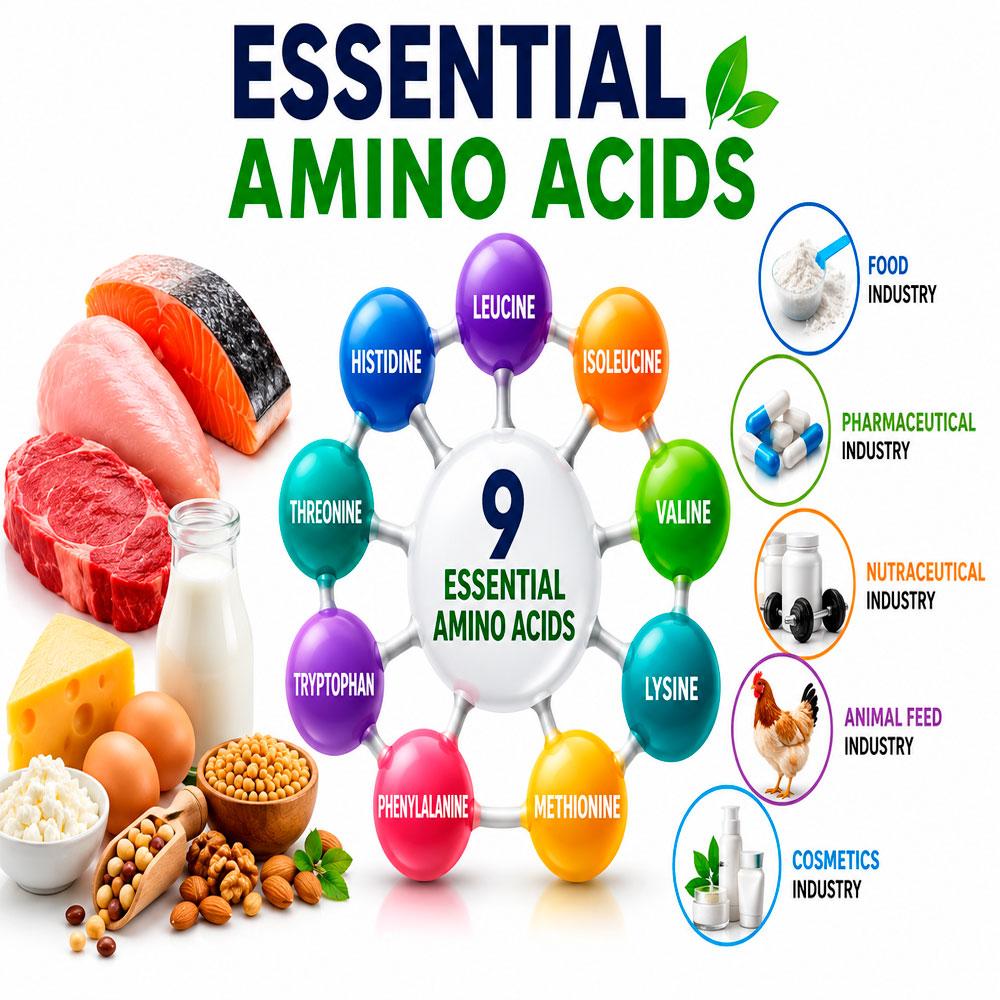
Essential amino acids are amino acids that cannot be synthesized by the human body in adequate amounts. Therefore, they must be obtained through food or dietary supplements.
The Nine Essential Amino Acids
Functions of Essential Amino Acids
Non-essential amino acids are amino acids that the body can produce on its own using other nutrients. Although they do not normally need to be obtained directly from food, they remain essential for maintaining good health.
Common Non-Essential Amino Acids
During periods of physical stress, illness, or intensive exercise, the body's demand for some of these amino acids may increase significantly.
| Feature | Essential Amino Acids | Non-Essential Amino Acids |
|---|---|---|
| Produced by the Body | No | Yes |
| Must Be Obtained from Food | Yes | Usually No |
| Importance in Muscle Development | Very High | High |
| Commonly Included in Supplements | Yes | Depends on Application |
| Risk of Dietary Deficiency | Higher | Lower |
Top Protein Sources
Animal-based proteins generally contain all essential amino acids, while many plant-based proteins can provide complete nutrition when combined appropriately.
Athletes and physically active individuals rely on amino acids to support muscle recovery and improve athletic performance.
Key Benefits
Branched-Chain Amino Acids (BCAAs)—Leucine, Isoleucine, and Valine—are particularly popular in sports nutrition because of their significant role in muscle metabolism.
Major Industries Using Amino Acids
Their versatility has made amino acids valuable ingredients in both consumer products and industrial manufacturing.
The global amino acid market has experienced significant growth due to increasing consumer awareness of health, fitness, and preventive nutrition.
Key Market Growth Drivers
Manufacturers, exporters, distributors, and raw material suppliers continue to invest in innovative amino acid production technologies to meet growing global demand.
For businesses operating in international trade, amino acids represent an important category of high-value ingredients.
Reliable suppliers with internationally recognized quality certifications are increasingly preferred by buyers worldwide.
What to Consider Before Buying
Most healthy individuals who consume sufficient protein through a balanced diet do not require amino acid supplements. However, athletes, older adults, or individuals with specific nutritional needs may benefit from supplementation under professional guidance.
Complete protein sources such as meat, poultry, fish, eggs, dairy products, soy, and quinoa provide excellent amounts of essential amino acids.
Excessive intake—particularly from supplements—may cause digestive discomfort or other health concerns in some individuals. Supplement use should follow recommended dosages and professional advice.
Essential and non-essential amino acids are both indispensable for maintaining optimal health, supporting muscle growth, and ensuring proper metabolic function. The primary difference lies in the body's ability to produce them: essential amino acids must come from dietary sources, while non-essential amino acids are generally synthesized within the body.
As the global nutrition, pharmaceutical, and functional food industries continue to expand, amino acids remain among the most valuable nutritional ingredients. For manufacturers, exporters, importers, distributors, and international B2B buyers, understanding amino acid applications can create new opportunities for innovation, product development, and global business partnerships.
Essential amino acids (EAAs) are vital nutrients that support muscle growth, tissue repair, and overall health while ser...

Despite sanctions, Iranian exporters continue to trade smarter in 2025, exploring new export alternatives, regional rout...

Discover how Iran, with vast oil and gas reserves, leads Middle East exports in crude oil, gas, petrochemicals, and bitu...

This blog examines Iran's increasing non-oil exports to Brazil, focusing on key products such as urea, bitumen, and date...