
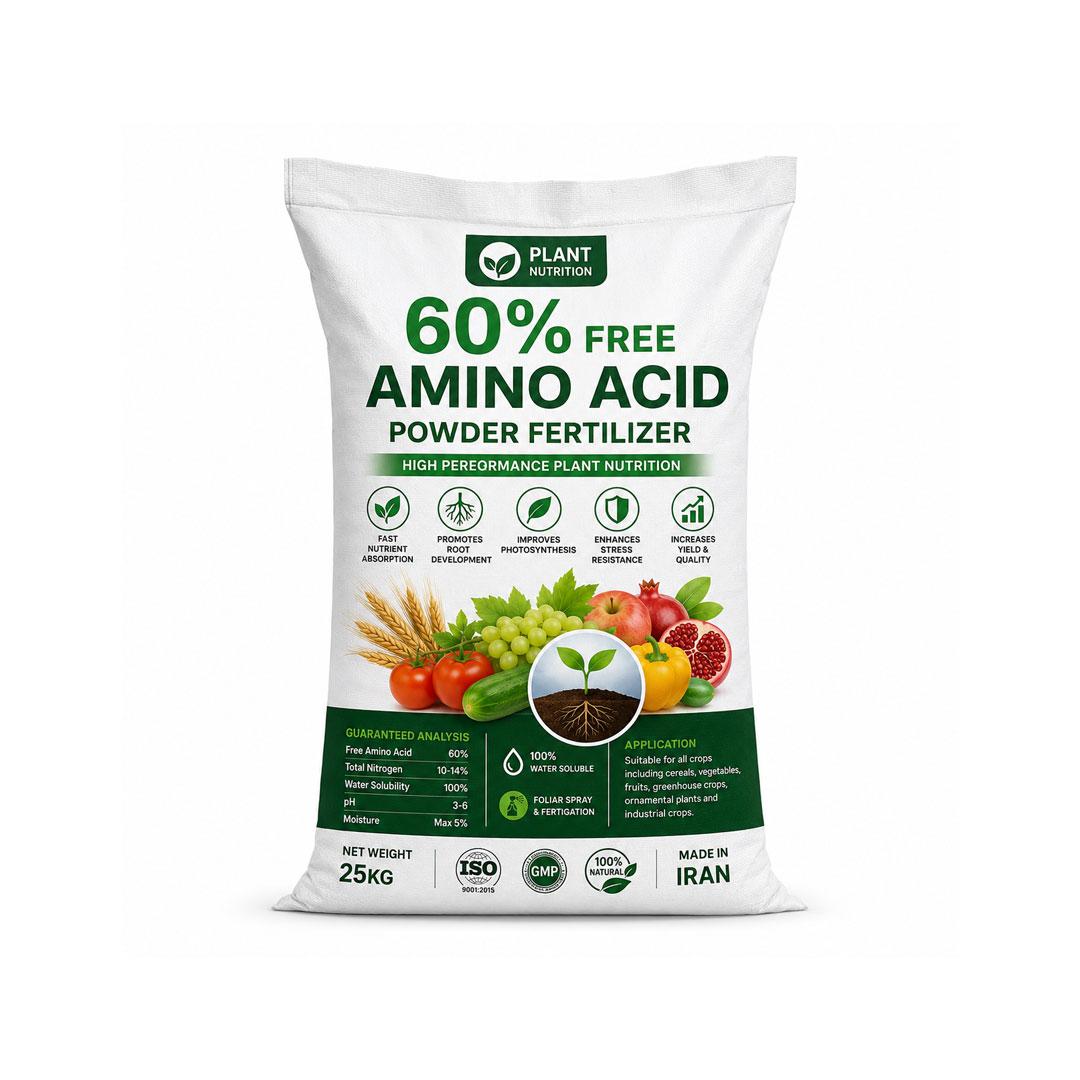
60% Free Amino Acid Powder Fertilizer from Iran, a powerful agricultural biostimulant designed to improve plant growth,...
صادرات کن
Modern agriculture is increasingly adopting sustainable farming practices and environmentally friendly agricultural inputs. Among these, agricultural amino acids have become one of the most effective plant biostimulants, improving crop productivity, enhancing quality, and increasing plant tolerance to environmental stress.
As global demand for biological fertilizers continues to grow, Iranian manufacturers have significant opportunities to expand into international markets. The Abrisham Road International B2B Platform connects manufacturers, exporters, importers, and agricultural businesses, promoting Iranian agricultural products to buyers worldwide.
Agricultural amino acids, particularly free amino acids produced through protein hydrolysis, are among the most effective biological fertilizers and plant growth stimulants. These compounds are rapidly absorbed by plants and participate directly in metabolic processes, reducing energy consumption while promoting healthy growth.
Key Benefits
Wheat
Application Timing
Benefits
Recommended Rate
Pistachio
Application Timing
Benefits
Recommended Rate
Grapes
Application Timing
Benefits
Recommended Rate
Tomatoes
Application Timing
Benefits
Recommended Rate
Greenhouse Cucumbers
Application Timing
Benefits
Recommended Rate
Citrus
Application Timing
Benefits
Recommended Rate
Rice
Application Timing
Benefits
Recommended Rate
Potatoes
Application Timing
Benefits
Recommended Rate
Iran has become one of the leading regional producers of agricultural amino acids through advanced manufacturing capabilities, technical expertise, and competitive production costs. Iranian producers supply high-quality products for domestic agriculture while expanding exports to the Middle East, Central Asia, the Caucasus, and other international markets.
The Abrisham Road International B2B Platform connects manufacturers, exporters, importers, distributors, and buyers through a professional international marketplace.
Platform Advantages
Agricultural amino acids are becoming an essential component of sustainable agriculture worldwide. Their ability to improve plant growth, crop quality, and stress resistance makes them one of the fastest-growing categories of agricultural inputs.
With strong manufacturing capabilities and strategic access to regional markets, Iran is well-positioned to become a reliable supplier of high-quality agricultural amino acids. The Abrisham Road International B2B Platform helps connect Iranian producers with international buyers, creating new opportunities for global agricultural trade.
60% Free Amino Acid Powder Fertilizer from Iran, a powerful agricultural biostimulant designed to improve plant growth,...
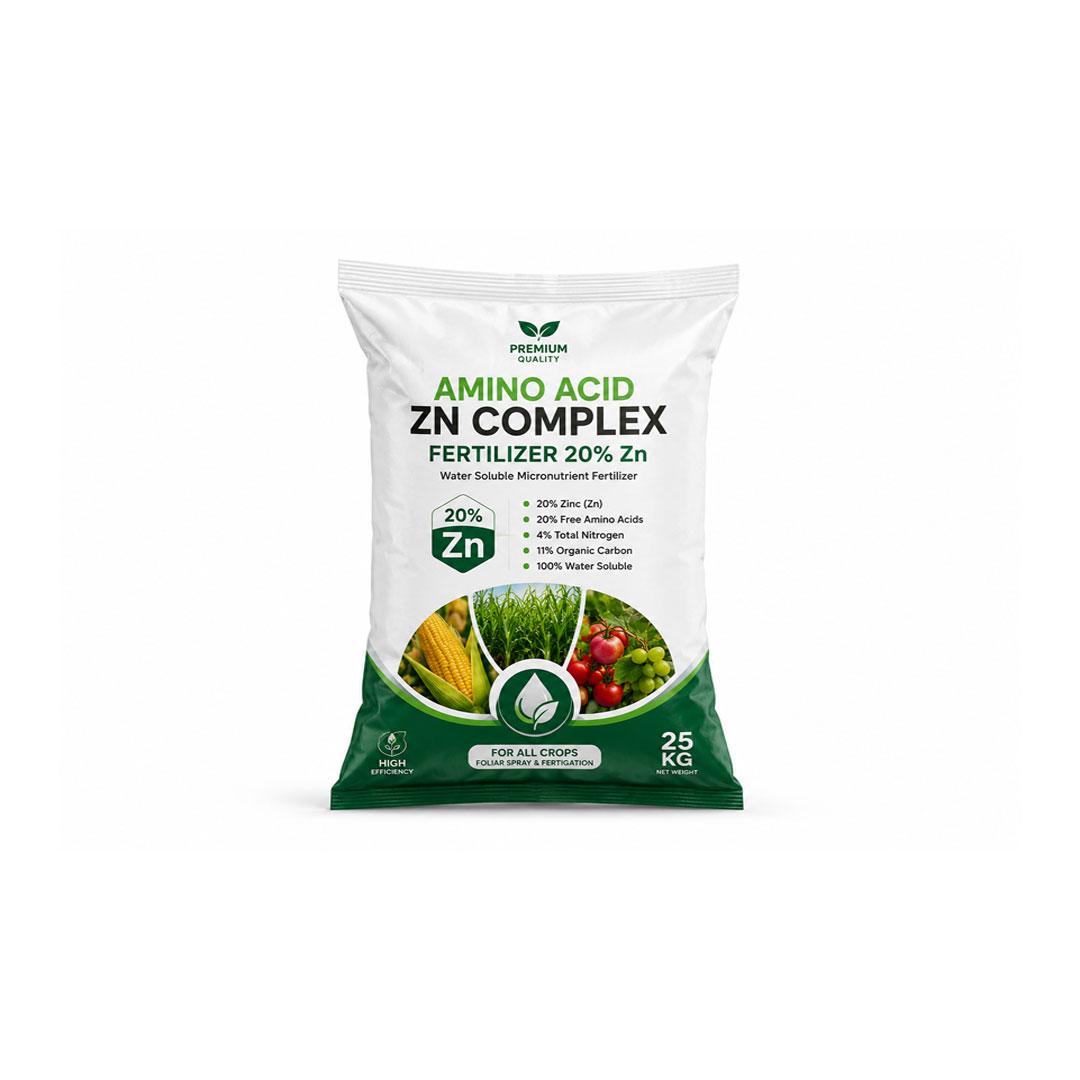
Amino Acid Zn Complex Fertilizer 20% Zn, a premium water-soluble chelated zinc fertilizer that enhances plant growth, yi...
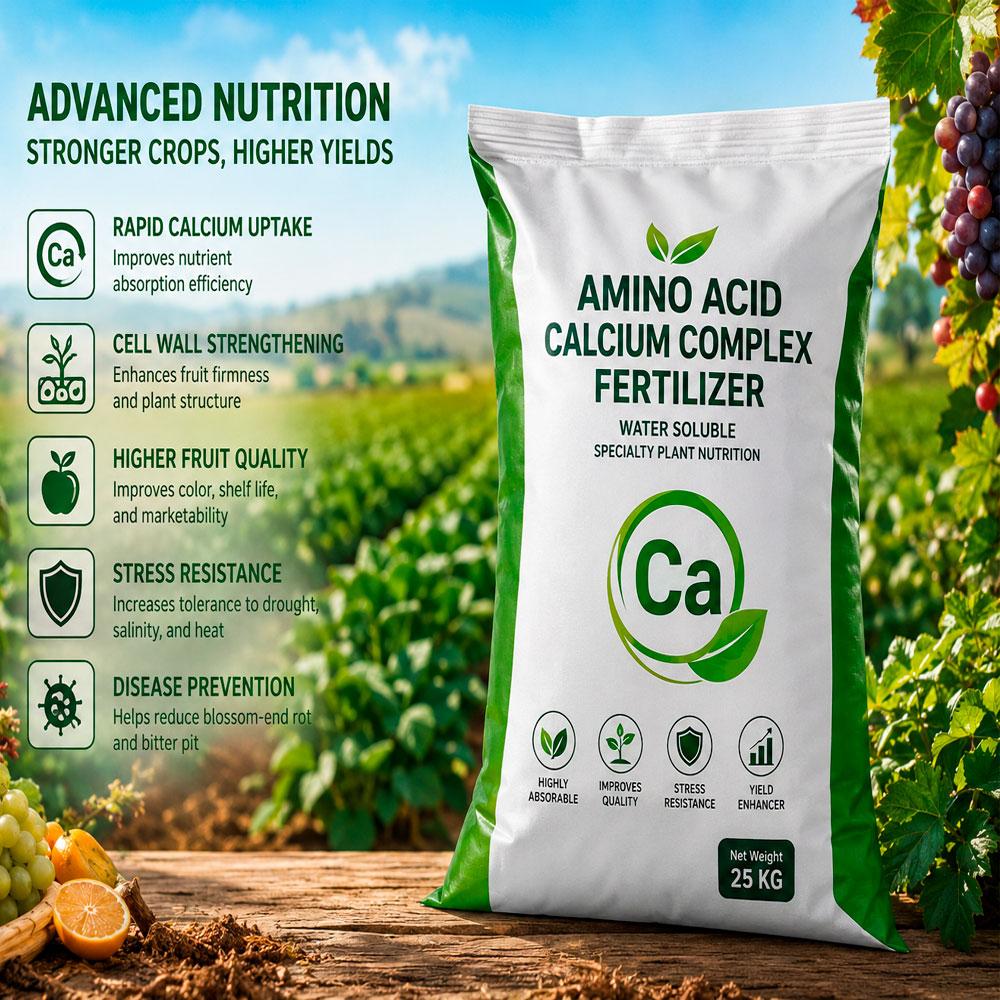
Amino Acid Calcium Complex Fertilizer enhances crop quality, nutrient absorption, and stress resistance while creating n...
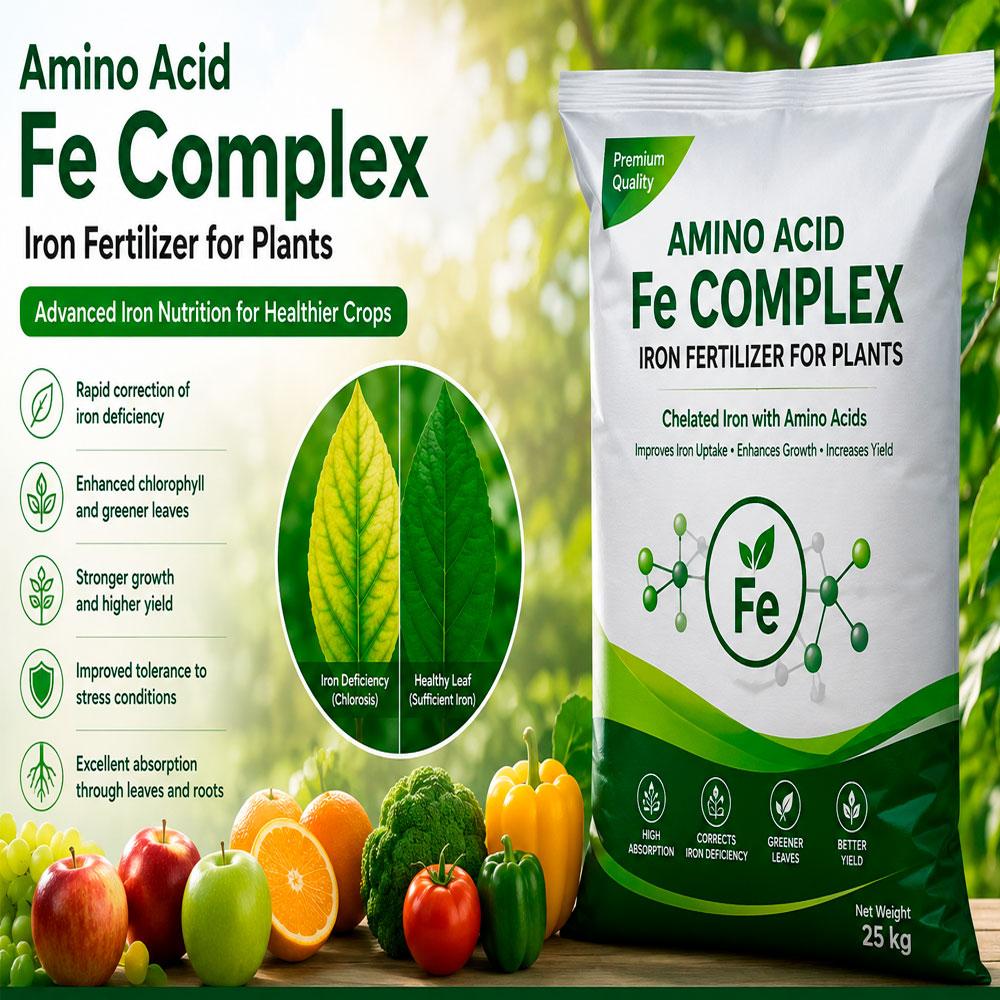
Amino Acid Fe Complex Iron Fertilizer improves iron absorption, corrects chlorosis, boosts chlorophyll production, and e...